

CELL CULTURE
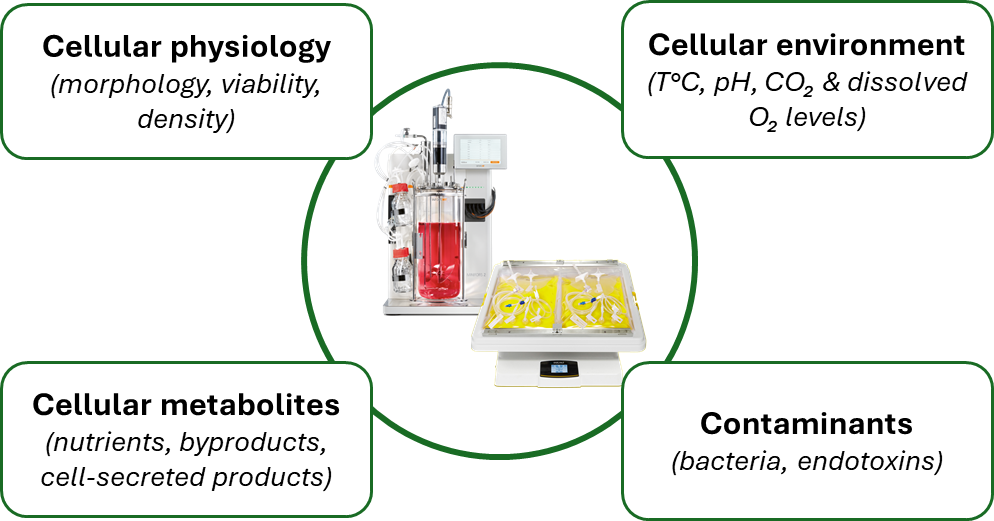
The implementation of analytical techniques has revolutionized control of cell cultures during bioprocess manufacturing. The parameters used for monitoring cell cultures can be classified into four categories: cellular physiology, cellular environment, cellular metabolite and contaminant monitoring.
Undoubtedly, all these techniques provide us with plenty of information about cell cultures. However,
- Are you able to reveal the reasons behind the issues that you encounter throughout your bioprocess?
- Don’t you find it crucial to understand the behavior of the cells in this complex environment?
Even highly similar cell types can have different gene expression patterns for a wide variety of reasons. Hence the need for an outstanding and unique approach based on transcriptomics.
One of GenSensor’ missions is to help you control your cell culture by linking gene expression network with the physiology, function and bioproduction of cells.
You’ll understand how a cell survives and functions properly in a complex and noisy environment, AND how it survives and behaves appropriately with a complex transcriptome.
By defining biomarker panel adapted to your bioproduction and conditions, we help you understand the modifications in gene expression of your cells at different time points
VACCINES
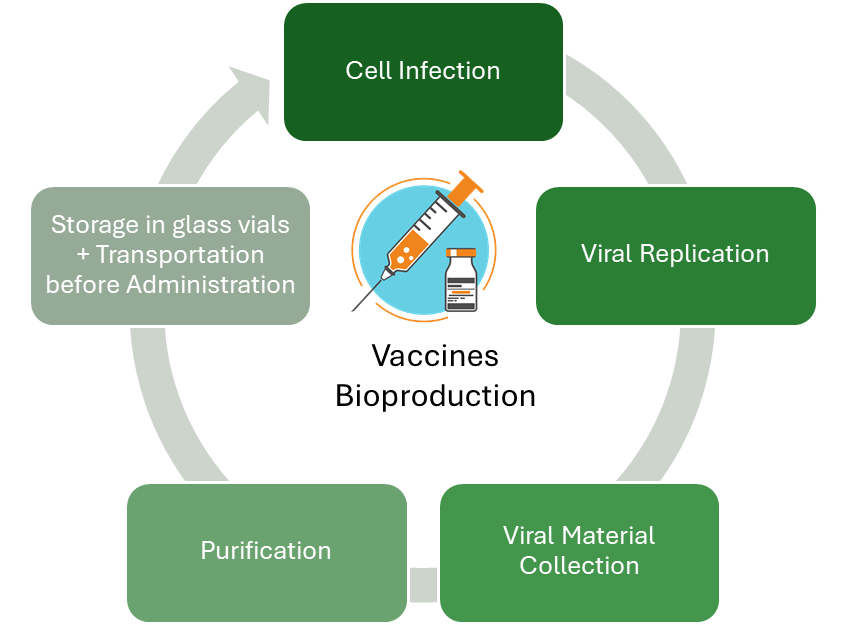
Vaccines represent an important public health tool to prevent infection & morbidity, reduce disease prevalence and risk of outbreaks.
Since 1798, when smallpox vaccine was developed, vaccine technology progressed from the use of inactivated and attenuated pathogens to the development of Virus-Like Particles (VLPs) and recombinant viral-vectored vaccines, to end up with mRNA vaccines that have reached the spotlight during COVID-19 pandemic.
To deliver effective and consistent vaccines, it is critical to use good manufacturing practice (GMP) compliant equipment, facilities and procedures. Note that process yield and production scale have a large impact on the manufacturing cost thus, on the cost / dose. Hence the need for a reliable, efficient and low-cost manufacturing.
To ensure an effective production and high yields, many factors should be taken into consideration:
- Multiplicity of Infection (MOI)
- Infection success rate
- Viral load
- Scale-up
By identifying cellular biomarkers whose expression activates viral life cycle, GenSensor helps you managing your infection conditions, so you increase your production performance.
VIRAL VECTORS
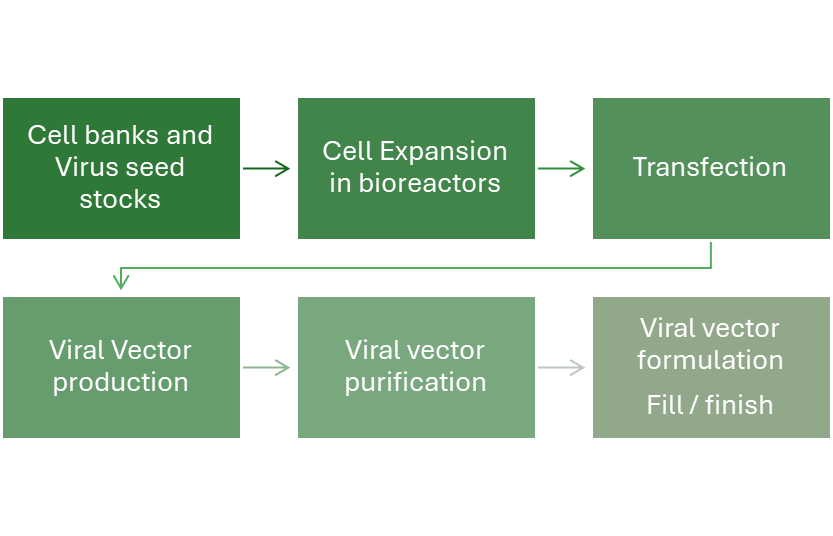
GenSensor helps you define a panel of biomarkers for different signaling pathways of your interest. You will link gene expression network with cell physiology, so you optimize your bioproduction performance.
Viral vectors are an effective tool for gene transfer and a potential candidate for gene therapy. Many virus types are used (Adenovirus, Retrovirus, Adeno-Associated virus, Herpes Simplex Virus) and the choice for clinical use depends on the efficiency of transgene expression, ease of production, product safety, toxicity and stability.
Viral vector bioproduction is considered successful if it meets the following criteria:
- High cell growth and low cell mortality
- High transfection yield (high viral titer)
- High ratio of FULL / EMPTY capsids
- Absence of lot-to-lot variation
Viral vectors manufacturing is followed by downstream characterization of the final product during which quantitative and qualitative analysis are made to assess production performance.
In case of low production yield, two major case studies can be considered:
- Low viral titer
- High viral titer but Low full / empty capsids ratio
Both cases are related to many factors such as low cell growth, high cell mortality or inappropriate viral encapsulation. It’s crucial to understand these biological phenomena so you’ll have control over your bioproduction.
EXOSOMES
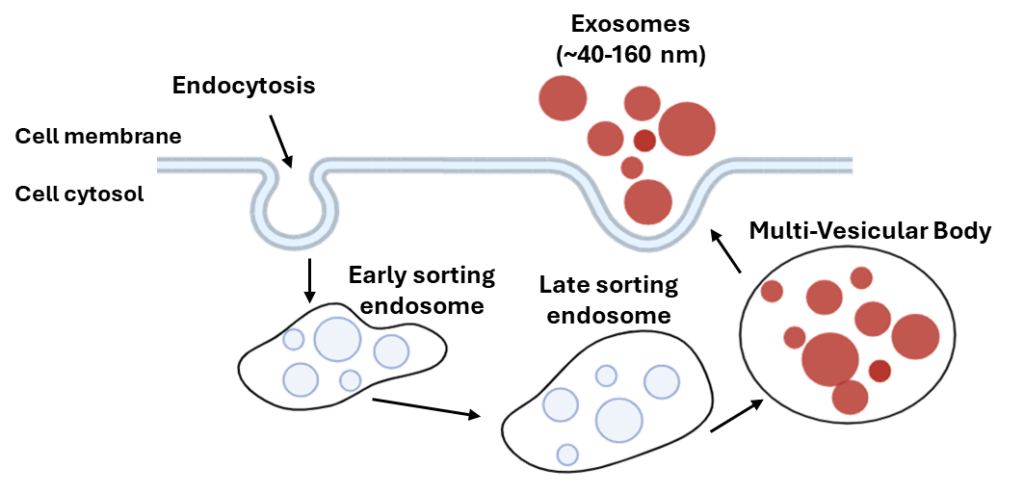
Given that the inherent biology of the cells may influence the content of the exosomes and their biological markers, a simplified transcriptomic analysis with GenSensor can help you identify specific biomarkers implicated in exosomes biogenesis, so you get nanoparticles of good quality.
Extracellular Vesicles (EVs) are nanoparticles released by all cells, prokaryotes and eukaryotes, as part of their normal physiology and during acquired abnormalities.
Exosomes are small EVs with a size range of ~40 to 160 nm in diameter with an endosomal origin.
They are implicated in the regulation of immune system, viral pathogenicity, cardiovascular fitness, metabolic and central nervous system-related diseases. For that, they gain considerable attention for their role as delivery vehicles for bioactive molecules to target cells.
Note that exosomes biogenesis gives rise to nanoparticles that differ by their size, function and content (membrane / cytosolic / nuclear proteins, extracellular matrix proteins, metabolites, nucleic acids).
Since many cellular proteins are involved in the origin of exosomes, genomic health of the cells may favor or arrest some of the key regulators of exosome biogenesis.
Like all the bio produced drugs, many factors should be considered while producing exosomes at large scale:
- Batch-to-batch consistency
- Concentration
- Composition
- Quality
Both cases are related to many factors such as low cell growth, high cell mortality or inappropriate viral encapsulation. It’s crucial to understand these biological phenomena so you’ll have control over your bioproduction.